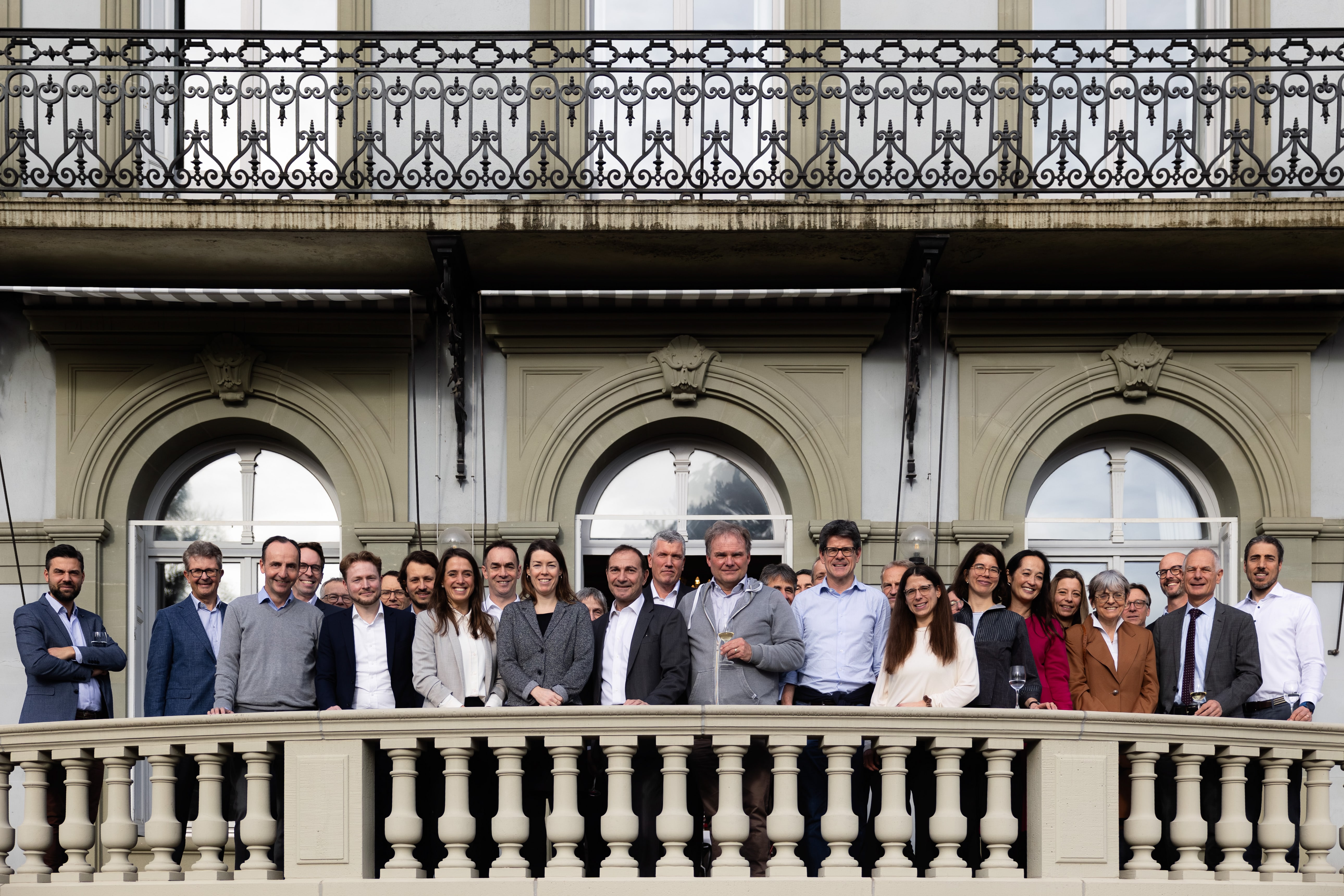
At the heart of the SVVK’s work is its core task of dialogue with companies in which its members are invested that violate the normative basis: in other words, fundamental rights that are enshrined in Swiss laws and international agreements. The SVVK has instructed partner companies to conduct this dialogue. In extreme cases, a recommendation to exclude the company may result. The SVVK is one of the sector’s most successful cooperations. Most pension institutions in Switzerland follow its exclusion recommendations. The SVVK has grown from seven members to eleven.
A dialogue that works
Back in 2016 when the Association was launched with seven members, almost nobody in Switzerland was talking about its mandate of “engagement”: auditing the companies in investment portfolios and engaging in dialogue with those that, through their business activities, commit serious and systematic violations of the normative basis. In most cases, the dialogue has borne fruit and enabled many small, positive changes. Gradually, there has been an increasing realisation across Switzerland that dialogue is one of the most effective approaches for investors. Over the years, the number of engagement dialogues has risen to over 360.
Climate strategy
In 2017, Switzerland ratified the Paris Agreement on climate change. The SVVK published its position on the topic in 2018, and attention began to focus on the climate issue. The SVVK joined Climate Action 100+, the world’s largest coalition of investors in this area. The initiative targeted the more than 100 companies that were responsible for the most greenhouse gases, and called for them to implement a credible transition to a more climate-compatible economy. Examples include the cement conglomerate Holcim, where the SVVK has been involved in dialogue for the Climate Action 100+ group since 2023.
In 2024, the SVVK entered into a new partnership with Robeco and expanded the climate dialogues to cover areas such as the fossil fuel sector and banks. At the same time, it directed its attention to biodiversity. Biodiversity protects against climate change but is also negatively impacted by it. Here, the dialogue centres on sectors such as the food industry, which impairs biodiversity yet is also dependent on it.
Cement, steel, chocolate
The SVVK launched further dialogues and brought them to a conclusion:
- on climate, with 20 cement and steel manufacturers (2019–2021) and 27 companies from various sectors, 7 of them Swiss (2021–2023),
- on child labour with 7 companies making chocolate (2020–2022),
- with Swiss real estate funds (2023) to gauge the climate awareness of the Swiss real estate market.
By working together, successes can be achieved through engagement with companies that individual institutions would have found it difficult to match.
Iwan Lanz, SBB Pension Fund
Exclusion as a last resort
When dialogue stagnates, investor letters are a possible measure, as was the case at McDonalds, because of worldwide breaches of workers’ rights at franchisees. Initial contact attempts were unsuccessful. The SVVK therefore turned to the board of directors and executive board of the Swiss business and coordinated with other investors. This proved expedient for both sides and resulted in a constructive exchange.
It can happen that dialogue remains unsuccessful, or a company is unable to change its business model. In such cases, exclusion is a last resort.
In 2017, for example, the SVVK recommended that its members exclude controversial, non-conventional weapons that are banned in Switzerland. In the years that followed, more and more pension funds and Swiss asset managers adopted the recommendations.
2019 was the first time a company – Petróleos de Venezuela – was recommended for exclusion because dialogue had been unsuccessful. Then, in 2022, the SVVK recommended excluding a number of countries on the basis of the SECO sanctions regime.
We are delighted that the SVVK exclusion list has now evolved into a standard that most institutional investors in the Swiss market accept and implement without reserve. That is a reflection of the SVVK’s excellent and reliable work.
Dominik Scheck, Die Mobiliar
More members, more recruits for the office
Seven institutional investors set up the SVVK in 2015:
- BVK pension fund of the Canton of Zurich
- compenswiss – Swiss Federal Social Security Funds
- comPlan pension fund of Swisscom
- Swiss Federal Pension Fund PUBLICA
- Pension fund of the Swiss Postal Service
- Pension fund of the Swiss Federal Railways
- Suva – Swiss National Accident Insurance Fund
Over the years, these have been joined by:
- Swiss Mobiliar insurance and the Migros pension fund (2018)
- BLPK pension fund of the Canton of Basel-Landschaft (2019)
- Asga Pension Fund Cooperative (2020)
Today, the eleven members represent assets under management totalling CHF 330 billion, compared with CHF 150 billion for the founder members in 2015.
Jacqueline Oh joined the SVVK’s office in 2016 as managing director, and was succeeded in 2019 by Tamara Hardegger. The team grew with the arrival of Christina Meier (2021) and Isabel Müller (2025).
The collaboration among members of the SVVK is unique and exemplary. We discuss the dialogues and topics in depth and develop solutions that really bring results. That is also partly due to the excellent work of our office.
Manuela Guillebeau, PUBLICA
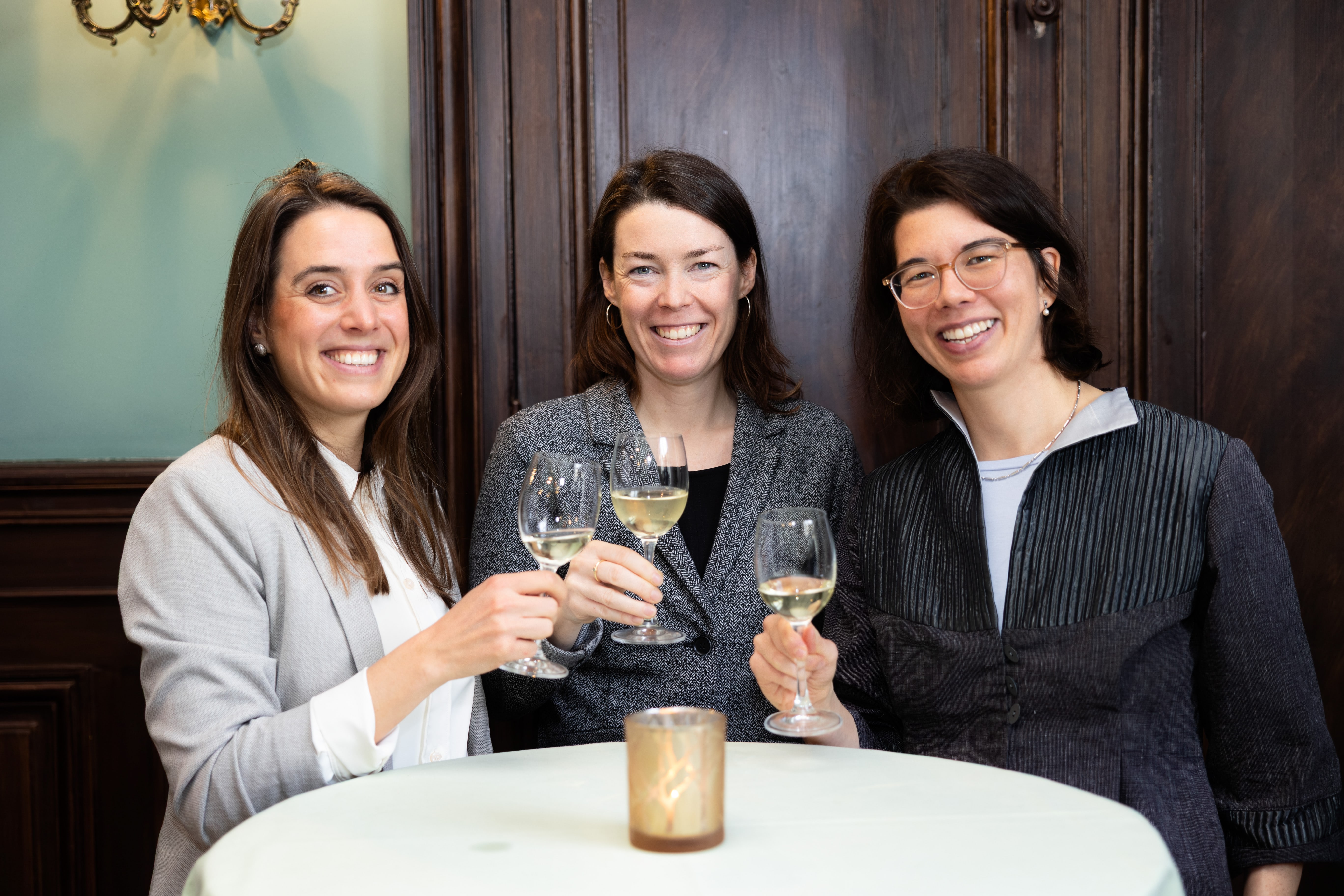
Impressions of the anniversary celebrations